


Building a regional pathway through participation, innovation and integrated planning
CRETE, GREECE
Overview
The Climate Neutrality Transition Roadmap for Crete brings together technical analysis, territorial assessment, stakeholder engagement, youth participation, landscape-based scenario development, innovative solutions and financing considerations. The process addresses climate neutrality in a complex regional context characterised by a tourism-driven economy, strong agricultural activity, diverse natural ecosystems and urban centres.
Starting Conditions and Transition Context
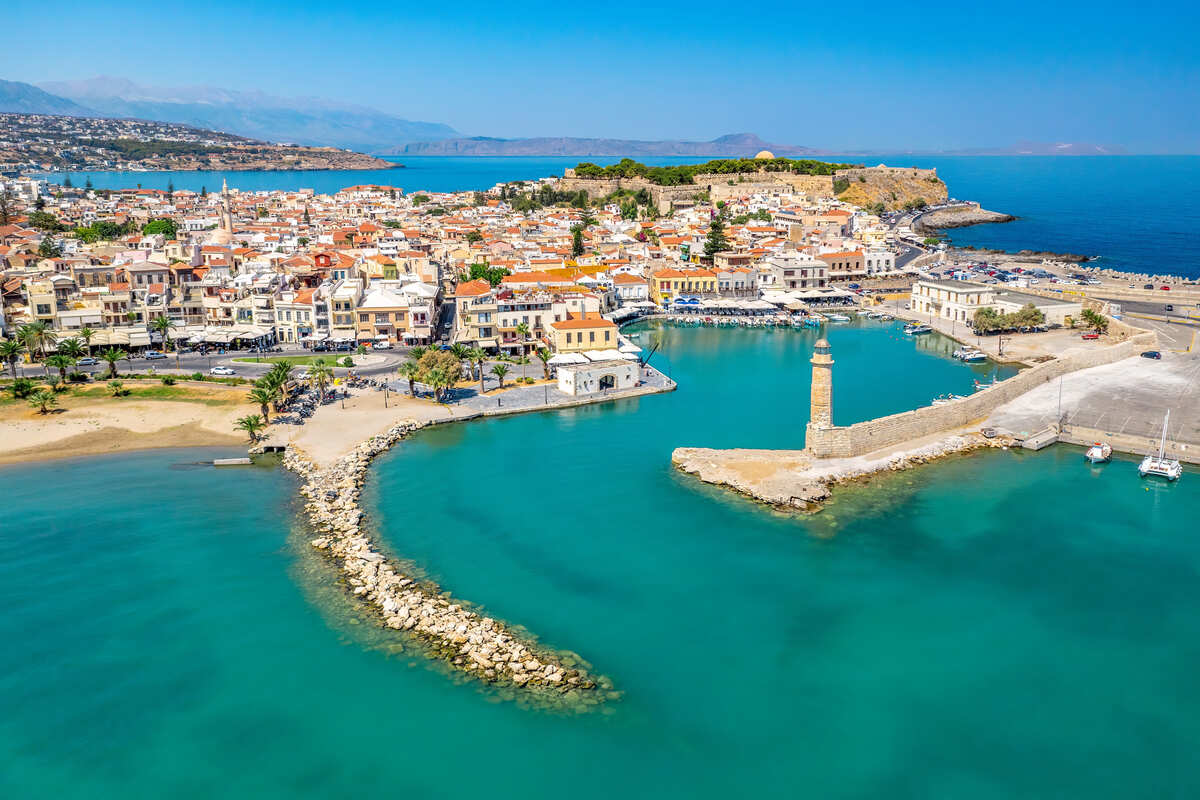
Crete's transition context is characterised by a tourism-driven economy, strong agricultural activity, urban centres and valuable natural ecosystems.
The GHG assessment identified the predominance of the Energy sector, accounting for 64% of total gross emissions, followed by agriculture, forestry and land use (23%), and waste (13%), while also highlighting the contribution of the island's natural carbon sinks. The roadmap addresses these conditions together with climate-related pressures including rising temperatures, water scarcity and biodiversity loss, as well as seasonal variations associated with tourism.
The co-creation process also identified priorities including renewable energy, sustainable mobility, water management, environmental and territorial protection and stronger stakeholder collaboration.

Energy & Landscape Transformation
Landscape-based approaches are used to connect energy transition with spatial planning, ecosystem protection, local development and community values. According to the roadmap analysis, achieving carbon neutrality requires generating an additional 2,953,926 MWh of renewable energy, reflecting the size and territorial complexity of the island. The CO2 PACMAN landscape approach explored three complementary scenarios: Urban and Coastal Energy Integration, combining renewable energy with climate adaptation and public-space enhancement; Renewable Energy and Ecological Coexistence, exploring floating photovoltaics and offshore wind alongside ecosystem-enhancement measures; and Agrivoltaics and Rural Resilience, integrating renewable-energy generation with agricultural production, water-saving practices and rural energy autonomy.

Innovative Solutions
The Open Innovation Cooperative Action created a structured process connecting challenges identified by local actors in Crete with innovative solutions proposed by European SMEs, start-ups and research institutions. Three priority challenges were explored:
- Circular alternatives to peat: investigating alternatives based on circular organic materials.
- Organic waste management in the hospitality sector: exploring smart small-scale treatment approaches.
- Sustainable urban mobility: exploring smart data collection and related solutions.
Co-creation
Crete's roadmap was supported by a broad participatory process involving regional and local authorities, businesses and SMEs, academia and research institutions, civil society organisations, infrastructure providers and citizens.
Citizen perspectives were captured through the AskYourCitizenOnCaN survey and Vox Populi activities, providing insights into public awareness, perceptions and willingness to support the transition towards climate neutrality.
These perspectives were further integrated through The Crete I’d Like Lab, which brought together citizens, institutional actors, researchers, businesses and civil-society representatives through workshops, stakeholder dialogue, interactive exhibitions and immersive visualisation experiences.


A particularly strong component was the Youth Think Tank, developed as one of the most extensive youth engagement processes within the CO2 PACMAN project. More than 100 students across different educational levels — from junior and senior high schools to university engineering students — participated in a structured pathway progressing from climate awareness and participatory research to scenario development and co-design.
Students worked with the CO2 PACMAN Tool, landscape scenarios and immersive visualisation technologies to explore alternative transition pathways and their territorial implications. School students developed a diverse range of outputs, including posters, videos, podcasts, comics, digital applications, physical models and awareness campaigns, while university engineering students developed evidence-based decarbonisation pathways using local datasets and recognised planning methodologies.
More than 80 Climate Neutrality Ambassadors were established through the process and officially recognised during the Crete Lab, creating a lasting network of young people engaged in climate action.

Financing Pathways
Given the scale and diversity of Crete's transition needs, the roadmap highlights the importance of a multi-level financing ecosystem combining European, national and regional funding with long-term investment mechanisms and private capital. Different instruments can support innovation and pilot actions, large-scale renewable-energy and climate-resilient infrastructure, sustainable mobility, agricultural transition and circular-economy solutions. Energy communities and cooperative ownership schemes can further contribute to mobilising local resources and strengthening participation in the transition process.
The roadmap also highlights implementation capacity as a key condition for success, emphasising the need for effective coordination among public authorities, research institutions, businesses, civil-society organisations and local communities.
The Roadmap
The Crete experience demonstrates how climate neutrality can be approached through a flexible and territorially grounded framework integrating renewable energy transformation, participatory governance, innovation-oriented solutions, educational engagement and implementation-oriented financing. Rather than defining a single transition model, the Roadmap reflects Crete's diverse environmental, social and economic conditions and connects scientific evidence with local priorities and stakeholder perspectives.


Stavroula Tournaki and Sofia Mavrigiannaki- Renewable and Sustainable Energy Lab, Technical University of Crete (ReSEL-TUC), stournaki@tuc.gr, smavrigiannaki@tuc.gr