

Integrating renewable energy, landscape and community perspectives towards Climate Neutrality
BRAČ, CROATIA
Overview
The Climate Neutrality Roadmap for Brač was developed through an integrated, participatory and evidence-based process, combining greenhouse gas assessment, stakeholder engagement, co-creation, spatial analysis and scenario development. The process explored pathways towards climate neutrality in an island context where renewable energy development, landscape protection and rural resilience need to be considered together.
Starting Conditions and Transition Context
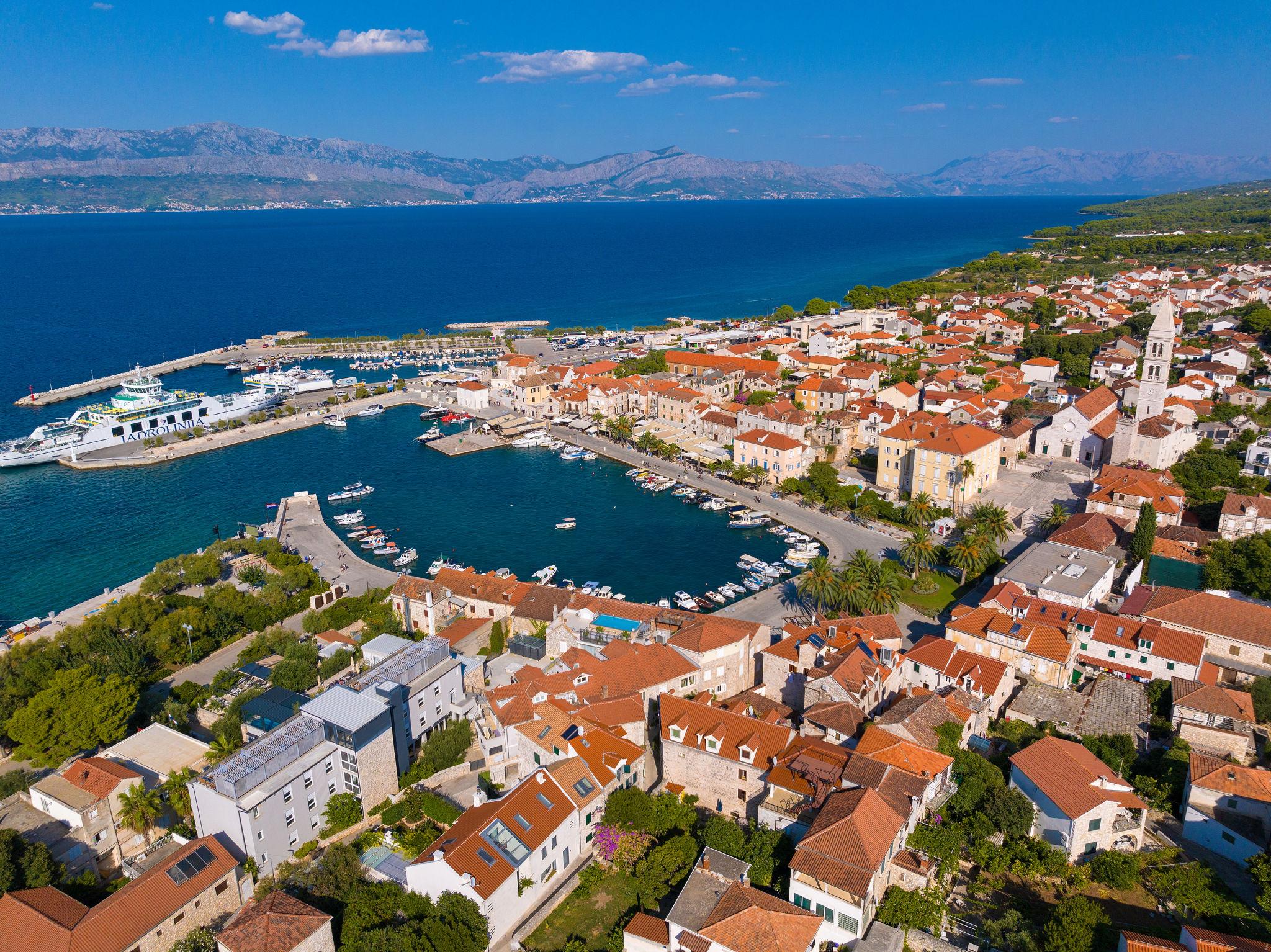
Brač is an Adriatic island with a distinctive landscape and rural character. Its transition context is characterised by strong environmental assets, while also facing challenges linked to energy dependency, water scarcity and seasonal pressures.
The GHG assessment identified the predominance of the Energy sector, accounting for approximately 68% of gross emissions, while also highlighting the contribution of the island's natural carbon sinks. These findings provided the basis for exploring potential mitigation measures and transition scenarios.
Natural carbon sinks play a particularly significant role in Brač's emissions balance, offsetting approximately 92% of gross emissions and resulting in net emissions of 7.5 kt CO₂eq. This highlights the importance of combining emission reduction measures with the preservation of the island's existing carbon absorption capacity.

The co-creation process also identified priorities including solar energy, waste management, water efficiency, sustainable mobility, and the preservation of landscape identity and quality of life.

Energy & Landscape Transformation
Renewable energy deployment constitutes a central component of Brač's pathway towards climate neutrality. According to the roadmap, achieving the carbon neutrality objective requires approximately 74,228 MWh of renewable energy production, corresponding to an installed capacity target of around 8.5–9 MW.
However, renewable energy development was not considered as a purely technical siting exercise. The CO2 PACMAN landscape approach examined how renewable energy could be integrated with the specific characteristics of Brač's landscapes. This landscape-sensitive approach was particularly relevant in light of community perceptions: 75% of survey respondents expressed a preference for maintaining existing landscape conditions, highlighting the importance of integrating renewable energy development with landscape identity and local expectations. Landscape scenarios explored alternative combinations of renewable energy and land uses, including decentralized agrivoltaics, wind and habitat regeneration, and agrivoltaics for olive and vineyard production.
Innovative Solutions
The roadmap also incorporates innovation-oriented activities. The Open Innovation Collaborative Action provided a framework for connecting local challenges with innovative solutions, including smart waste collection, smart water monitoring and EV fire-safety solutions.
Co-creation
Community engagement was an important component of the roadmap development process. Public authorities, businesses, civil society, students and citizens contributed through participatory activities, including the Rooting Lab, Vox Populi, the Youth Think Tank and the “The Island I Would Like” activities. The CO2 PACMAN Tool supported discussion and exploration of transition options.


Financing Pathways
The roadmap considers a combination of grants, loans, technical assistance and other financing mechanisms, including opportunities for community-based investment and blended finance.
The Roadmap
The Brač experience demonstrates how renewable energy scenarios can be explored together with landscape considerations, rural resilience, stakeholder perspectives and financing needs, creating a more integrated basis for climate neutrality planning.

Martin Bućan- Split-Dalmatia County, martin.bucan@dalmacija.hr
Tibor Bešenić - The International Centre for SustainableDevelopment of Energy Water and Environment Systems (SDEWES), tibor@sdewes.org